Beyond the Lab: The Wood Cookie Experiment's Last Harvest
By: Isabella Garrioch
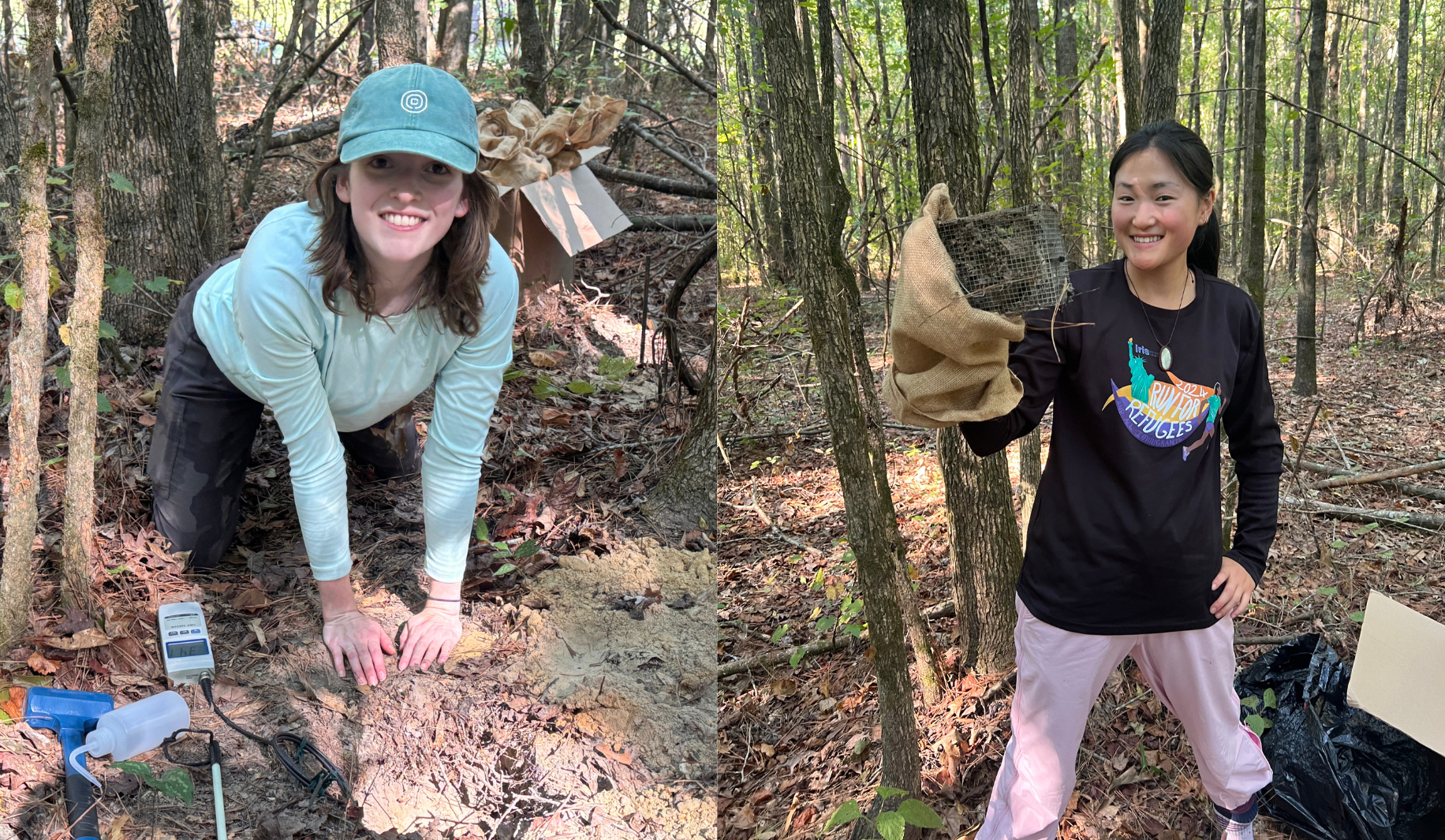
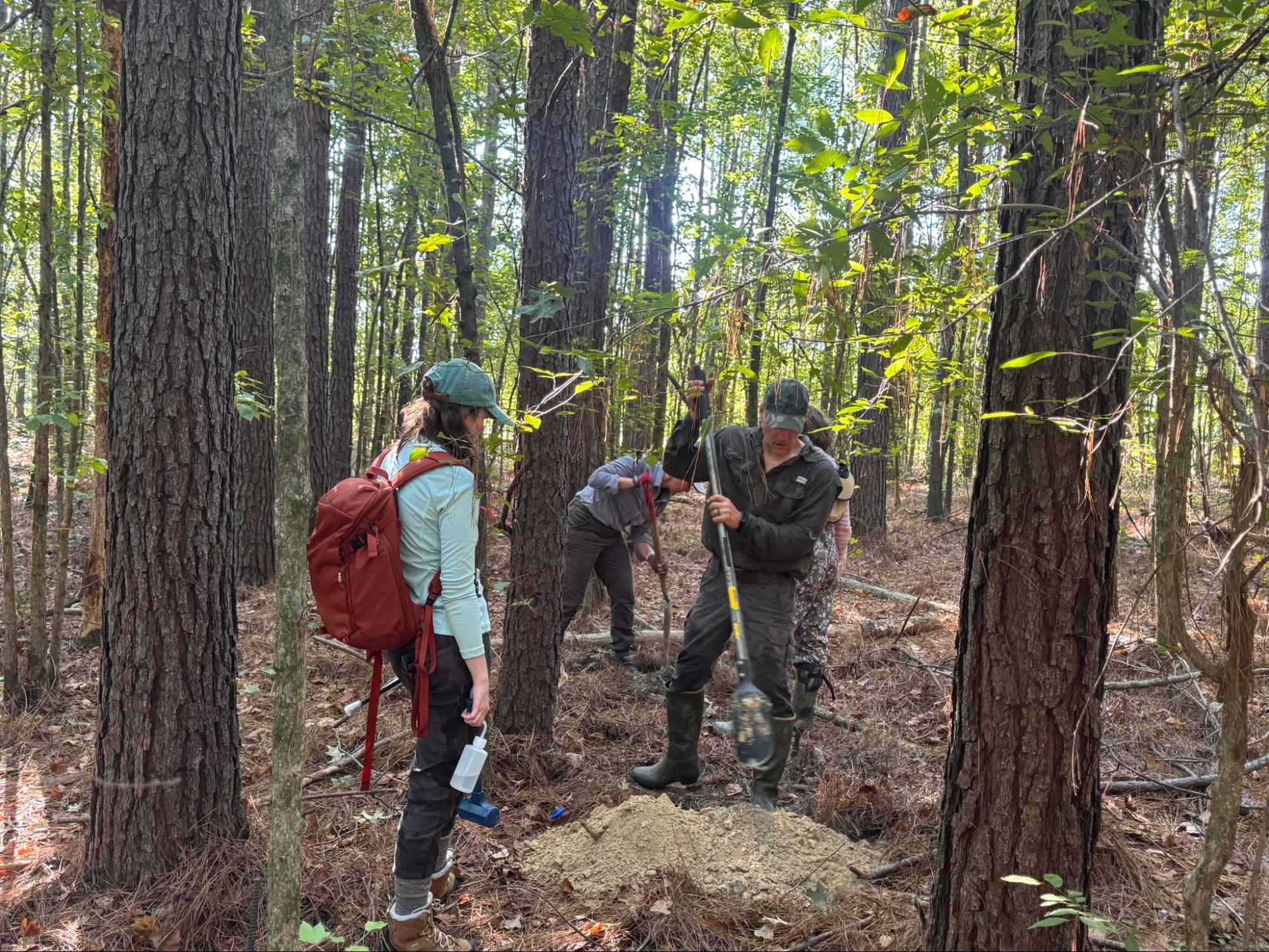
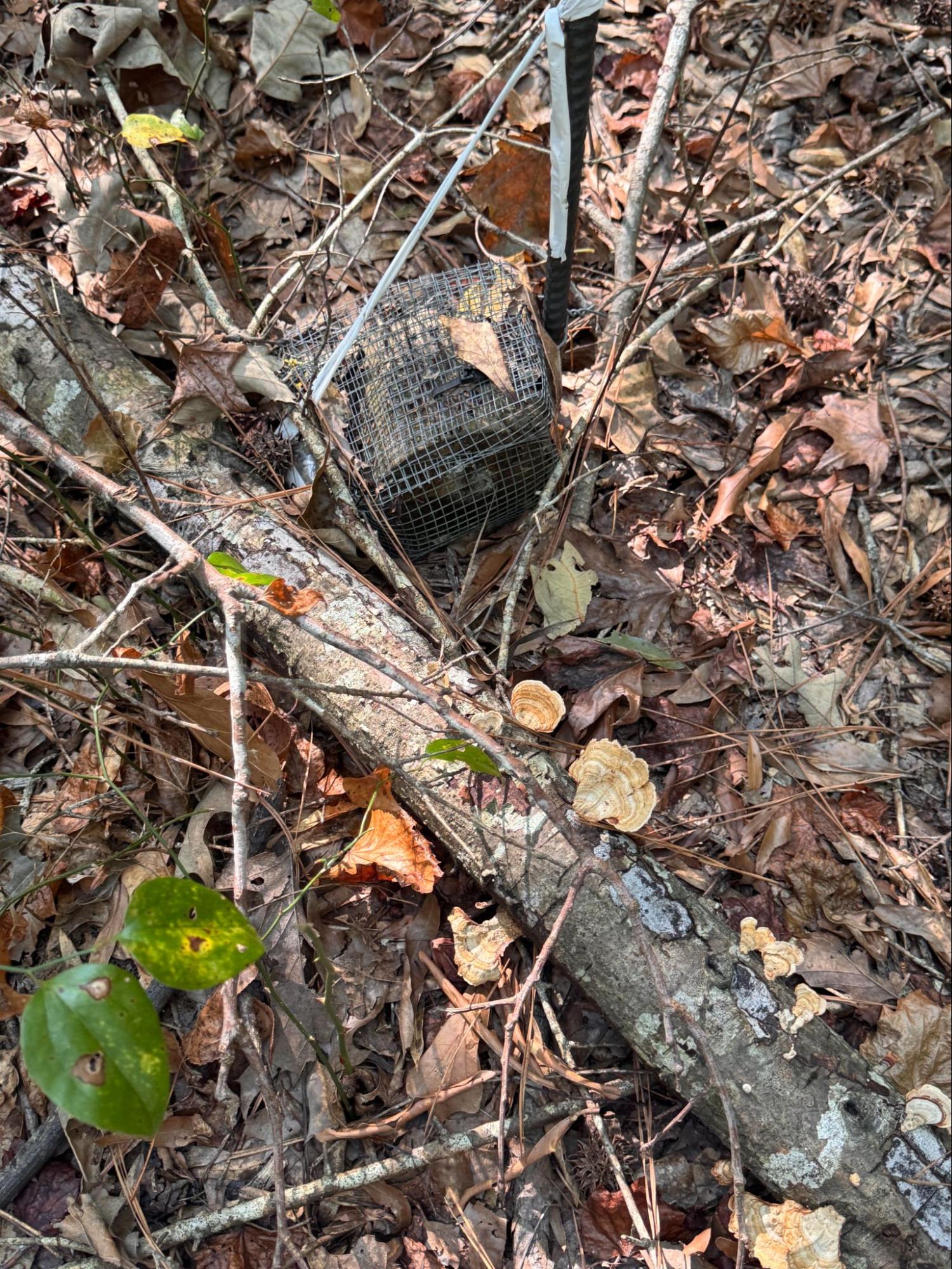
Two hours northeast of Jackson, Mississippi, and a few hundred feet off the road, trees tower overhead and the light is speckled. Past where the underbrush thickens and the ground turns soft with leaves, a small patch of earth marked with orange flags signifies that this is the right place.
A small cross-section of what used to be a standing Eastern White Pine tree sits a foot and a half beneath the soil, sealed in a case of wire mesh. The Carbon Containment Lab (CC Lab) calls these biomass discs “wood cookies.” This particular wood cookie has been underground for six years, through wet summers and drought, through every seasonal shift felt by the forest above. Buried underground, the wood cookie has spent years being quietly consumed and altered, but how much? And by what?
This season, the CC Lab’s Biologic team is digging up the answer as part of the Wood Cookie Experiment. This project is part of the foundational science research that explores low-cost management techniques to slow the decay of woody biomass. By assessing baseline decomposition in a variety of climates, as well as in buried, submerged, and limewash-treated conditions, the CC Lab tests the levers that control decay and identifies what makes nature’s decomposers tick.
Natural Wood Decay
Usually, the fate of a dead tree is to become food for microscopic organisms, which break down and consume the wood’s carbon-rich structural components.[1] However, in nature, wood preservation happens all the time, but only under very specific conditions, and almost always through a series of accidental events. They say that the steps to becoming a fossil are to die in the right place and get buried quickly.[2] For wood, the steps for preservation are mostly the same. In conditions that are dry, cold, or devoid of oxygen, a piece of wood has the potential to sit relatively unaffected for hundreds to thousands of years.[3],[4] The moment that oxygen seeps in or the humidity rises, agents of wood decay will opportunistically consume the wood and respire that carbon to the atmosphere as carbon dioxide or methane.[5]
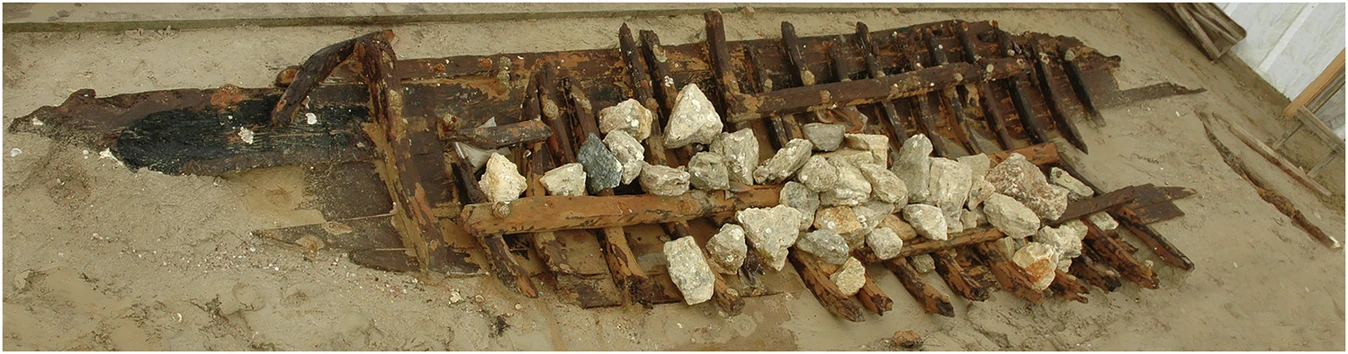
Most of our understanding of how wood degrades comes from archeological studies of shipwrecks that miraculously remain intact for a thousand years or from assessments of wood preservatives used for building human structures.[4] The Wood Cookie Experiment expands how we think about wood decomposition in the context of the growing field of carbon capture and storage.
Engineering an Accident
If a ship can stay intact for over a thousand years by accident, we at the CC Lab Biologic Team ask whether we can engineer those same conditions intentionally. That's the idea behind Terrestrial Storage of Biomass (TSB), a type of carbon capture that uses waste organic material to trap carbon underground.[7] Waste wood is being produced every year in the United States through tree thinning in efforts to prevent wildfires. This material needs to be removed and disposed of in order to reduce wildfire risk caused by small-diameter trees and shrubs. The most common practice now is piling and burning, which solves the wildfire risk problem, but results in thousands of metric tons of greenhouse gas emissions per pile burned at a great cost.[8] TSB approaches aim to divert this waste and trap carbon underground, contained in the woody biomass, for the long term. This approach only works if the biomass remains intact, minimally touched by the decomposers.
![Trees pull carbon dioxide out of the air through photosynthesis, but when wood decays, that carbon gets released again. Burying wood will theoretically interrupt that cycle by sealing out the oxygen and moisture decomposers need, so the carbon stays locked in the wood instead. Graphic: A. Fischer/Science, adapted from Yao (2024).[9]](/assets/burial-diagram-1791222896.png)
This September marks the beginning of the third and final harvest of the Wood Cookie Experiment. Wood cookies have already been collected and analyzed for decay in 2022 and 2024 from our sites, located in New Hampshire, Maine, Connecticut, California, Nevada, and Mississippi, where we begin this season’s field campaign. Their climates and soil environments vary in annual temperature, rainfall, microbial diversity, and insect populations.
![Map of the current field sites for the Biologic Program at the Carbon Containment Lab in the United States. Red points represent Wood Cookie Experiment sites and black points represent the field sites of other complementary experiments exploring biologic carbon capture pathways. Graphic created by A. Ting using R and RSstudio with climate data retrieved from Beck et al. (2023).[10]](/assets/map-of-the-current-field-sites-1791223362.png)
The Team Behind Decomposition
That range of climates and soils sets up very different conditions for the same decay agents to operate in. Our treatments test how simple, cost-effective measures can slow decay. But first, we needed to identify the types of decay we would likely see in our samples. Previous studies point to four main drivers: fungi, bacteria/archaea, insects, and physical weathering.
Fungi are by far the fastest and most dominant decomposers of wood. Forty percent of a log could be gone in a month if exposed to fungi in optimal warm and moist conditions.[11],[12],[13] If you were to take a hike in the woods anywhere in the world and step over a piece of fallen tree, you can safely assume that a fungus is responsible for its structural breakdown. Depending on the broad category of fungi, also called guilds, the appearance, texture, and chemical composition of the remaining wood will vary significantly.[14],[15],[16]
Aptly named “biscuit rot,” crumbling brown cuboid pieces of wood are indicative of the guild brown-rot. Softwoods, like pine, are particularly vulnerable to this fungal guild.[15] Brown-rot fungi use tiny chemical "scissors" to chop up the wood's structural fibers, leaving behind a crumbly, brown skeleton of a polymer called lignin. This leftover wood is not only carbon-rich but incredibly difficult to break down further.[16] From our carbon lens, we can think of brown-rotted lignin as safe from further decay and release to the atmosphere.
If the piece of log you found in the woods was white and spongy, it was most likely consumed by white-rot. White-rot is the most common fungal guild in decaying hardwoods, although it can be found alongside brown-rot as well. These fungi use enzymes to eat every component of wood, including the lignin.[17] A wood cookie fully consumed by white-rot will leave little to no carbon behind.
Soft-rot fungi are the last and slowest type of wood-rot fungi and occur only in extreme environments that are very cold or low in oxygen.[14] These fungi are similar to bacteria in their mode of attack, which typically occurs cell by cell, from the inside out.[17] Like white-rot, soft-rot consumes all of wood’s components, but it does so five times more slowly than the other fungal guilds.
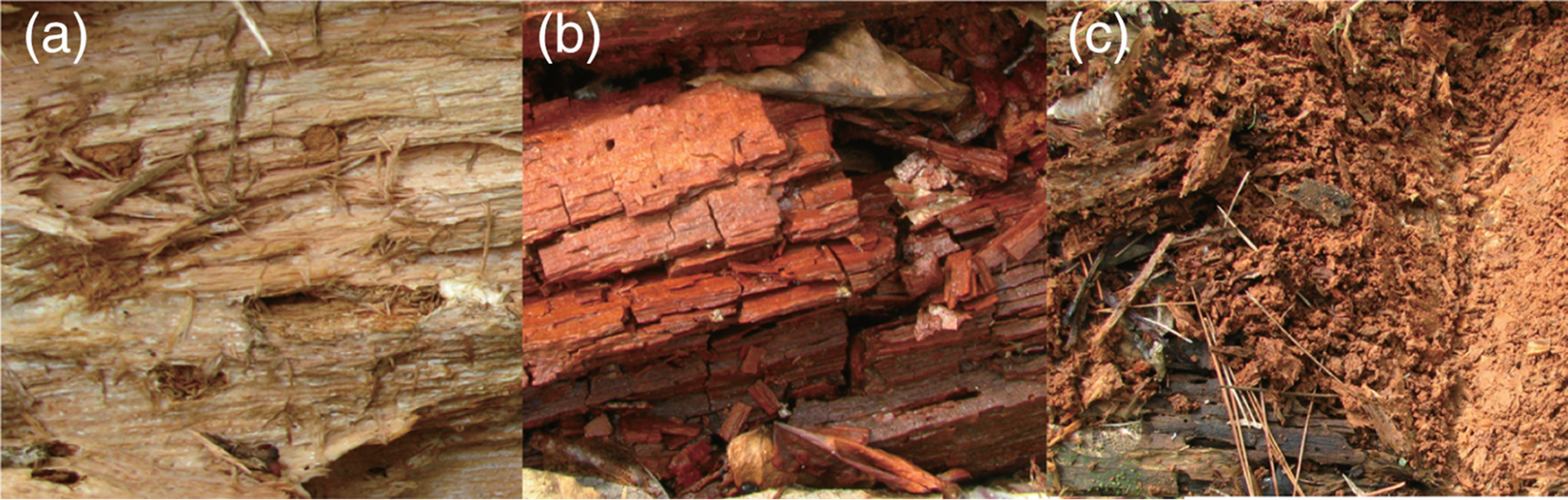
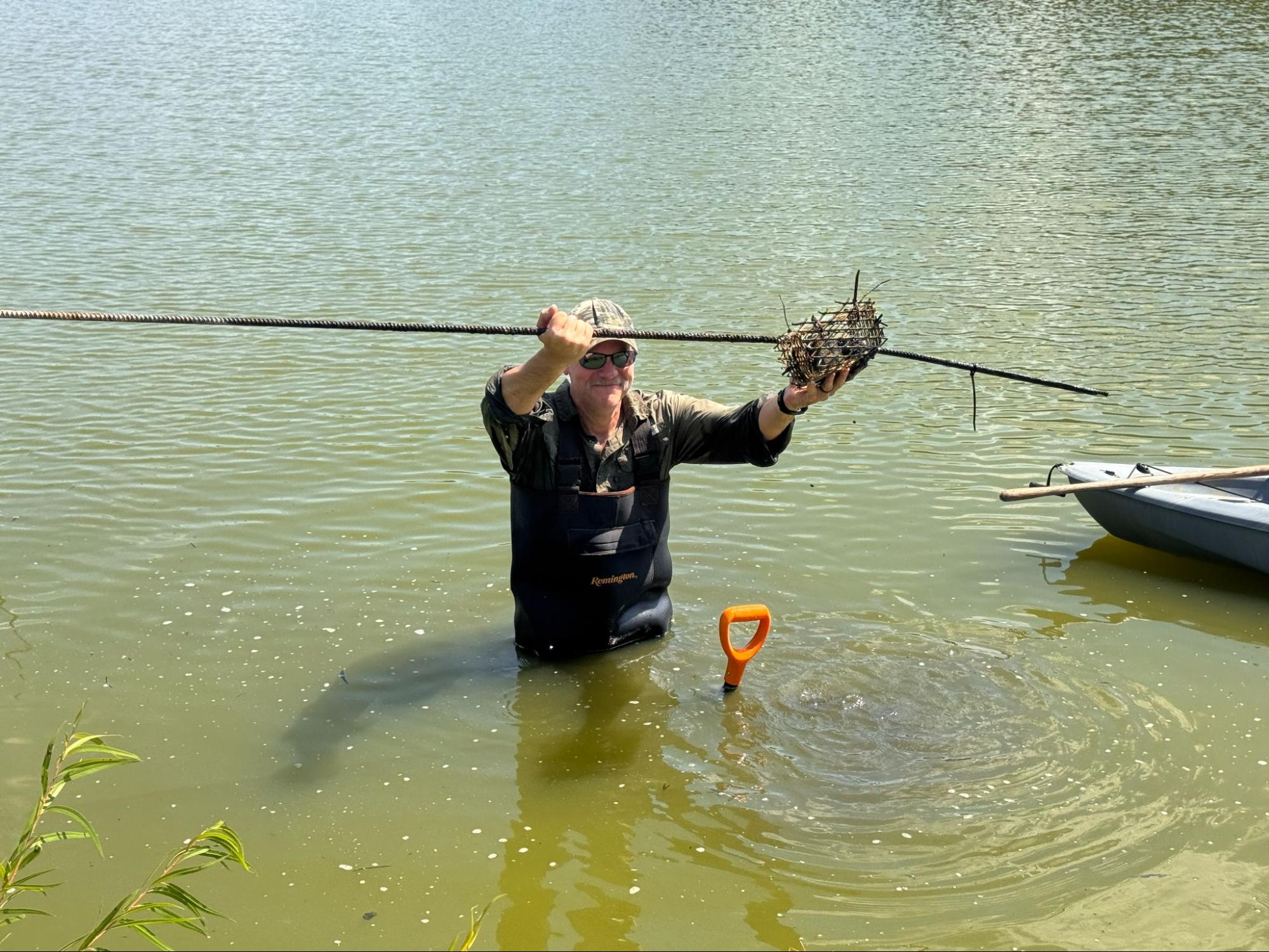
Bacteria are everywhere and also consume wood with enzymes.[3] They have a hard time breaking down lignin, so they are usually found alongside fungi that have already begun the breakdown process. Unlike fungi, bacteria are very slow and could take decades to even hundreds of years to completely destroy large pieces of wood.[3] The archaeological finds of preserved wood are likely cases of bacteria-consumed wood, which exclude fungi entirely by being submerged underwater. The oxygen-depleted environment of water makes it hard for fungi to survive but is perfect for bacteria.[19]
The right oxygen-free environments, like wetlands or shallow ponds, can also shift decay toward methanogenesis, a chemical process where archaea (microorganisms similar to bacteria) produce methane instead of carbon dioxide. Methane traps far more heat in the atmosphere than the carbon dioxide released by typical decay, which means the type of gas escaping matters as much as whether decay happens at all. A wood cookie that avoids fungi and bacteria doesn't necessarily avoid greenhouse gas emissions.[20]
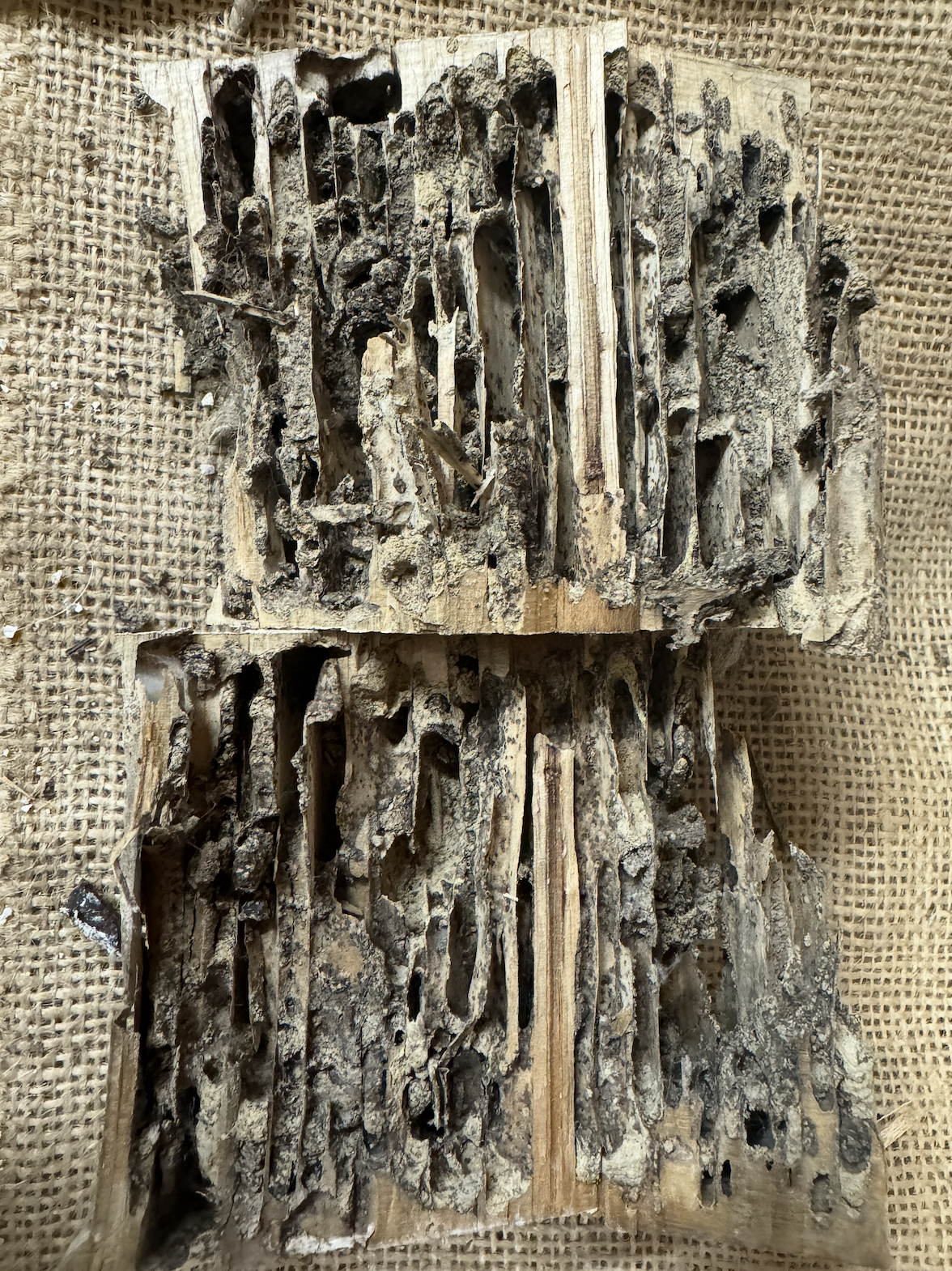
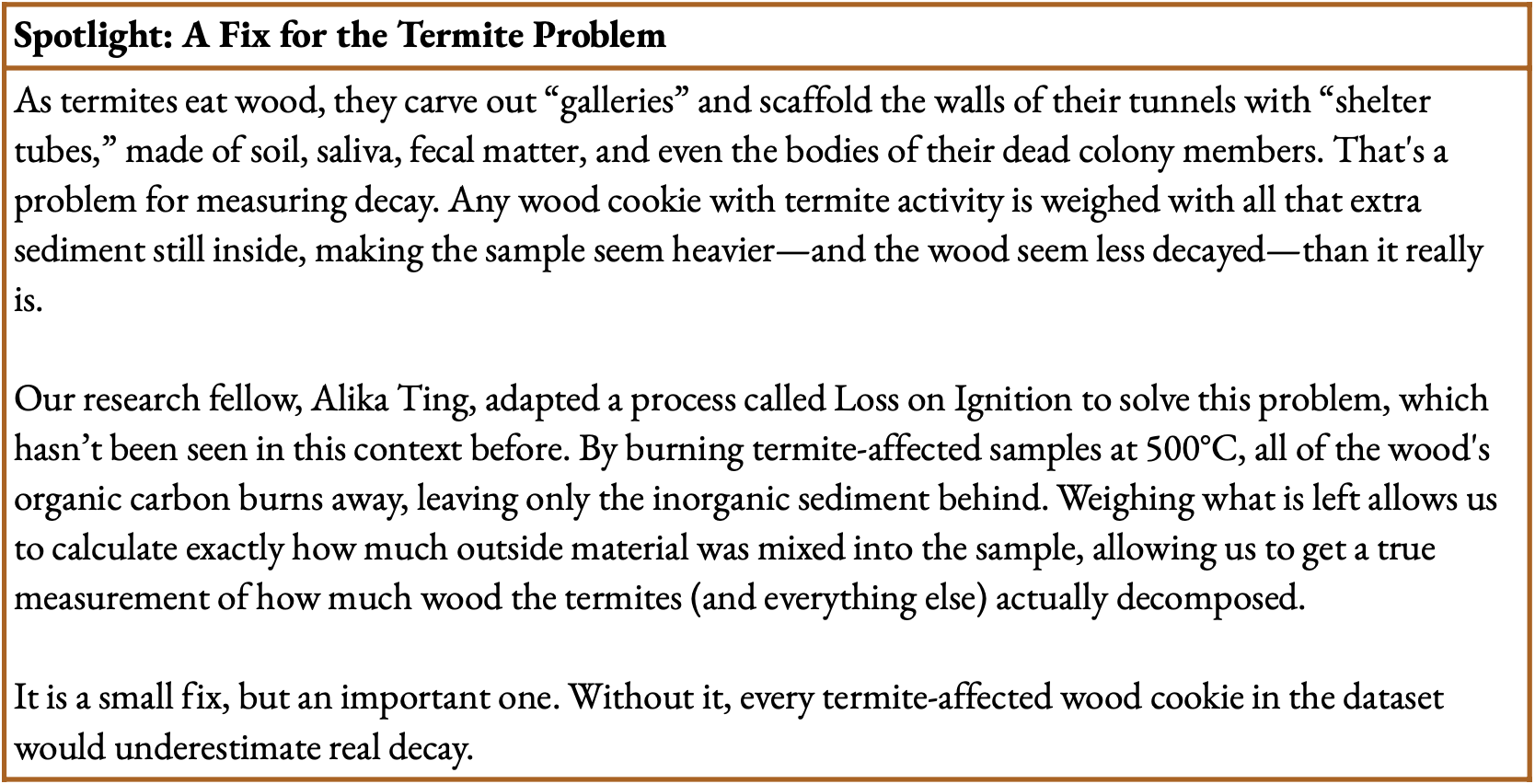
A piece of wood with carved-out, hollow spaces and scattered with clods of dirt throughout has almost certainly been attacked by termites. Termites are opportunistic and destructive insects that are often associated with doomsday pest-control issues in homes. They are some of the only animals that not only live in wood, but consume it.[21] In southern regions of the U.S., with the native termite species R. flavipes, wood can be destroyed quickly and completely. They like moist, warm conditions[22] and will attack and abandon wood in seemingly random events. Our Mississippi site has had lots of termite presence.
Not all agents of decay are alive. Rain, temperature swings, and even the sun will also degrade wood over time. If you have wooden patio furniture, you may have already seen how greying progresses over the years, which is the visual cue for a process called ultraviolet (UV) photodegradation. Similar to human skin, the outside layer of wood can be damaged when exposed to the sun.[23] Moisture and temperature changes can cause swelling, cracking, and breaking. Physical weathering itself does not lead to much loss of carbon to the atmosphere, but may expose new areas of the wood to decay by our familiar fungi, bacteria, and insects.[24]
Initial Findings
With all of that decay science in mind, we're back to our own experiment: testing whether burying, submerging, or changing the pH of wood via a limewash prevents carbon loss to the atmosphere by keeping the decomposers out, in comparison to samples with no treatment. Our first two harvests, from 2022 and 2024, have already revealed some interesting findings. Nevada's natural environment, for one, is so dry that it does a good job of reducing biological decay on its own, even without any added treatment.
An interesting relationship has also emerged between soil type and the effectiveness of burial for wood carbon retention. In some places, burial slowed decay, and in others it actually sped it up, potentially because of surrounding soil type. Some soils are better at maintaining low-oxygen conditions, while others actually keep conditions warm and moist enough for biologic decay to continue in months when aboveground conditions are too cold. Whether that pattern holds after six years underground is one of the big open questions leading us into this final harvest.
What’s New Going Into the Final Harvest
We will spend this fall collecting all 210 wood cookies and bringing them back to the lab to measure how much decay occurred over 6 years. Our main measurement of interest is mass loss, which is found by weighing the cookies before and after the experiment. This tells us how much of the cookie has been lost over time, and since most wood mass is made up of carbon, we can estimate how much carbon is lost to the environment.
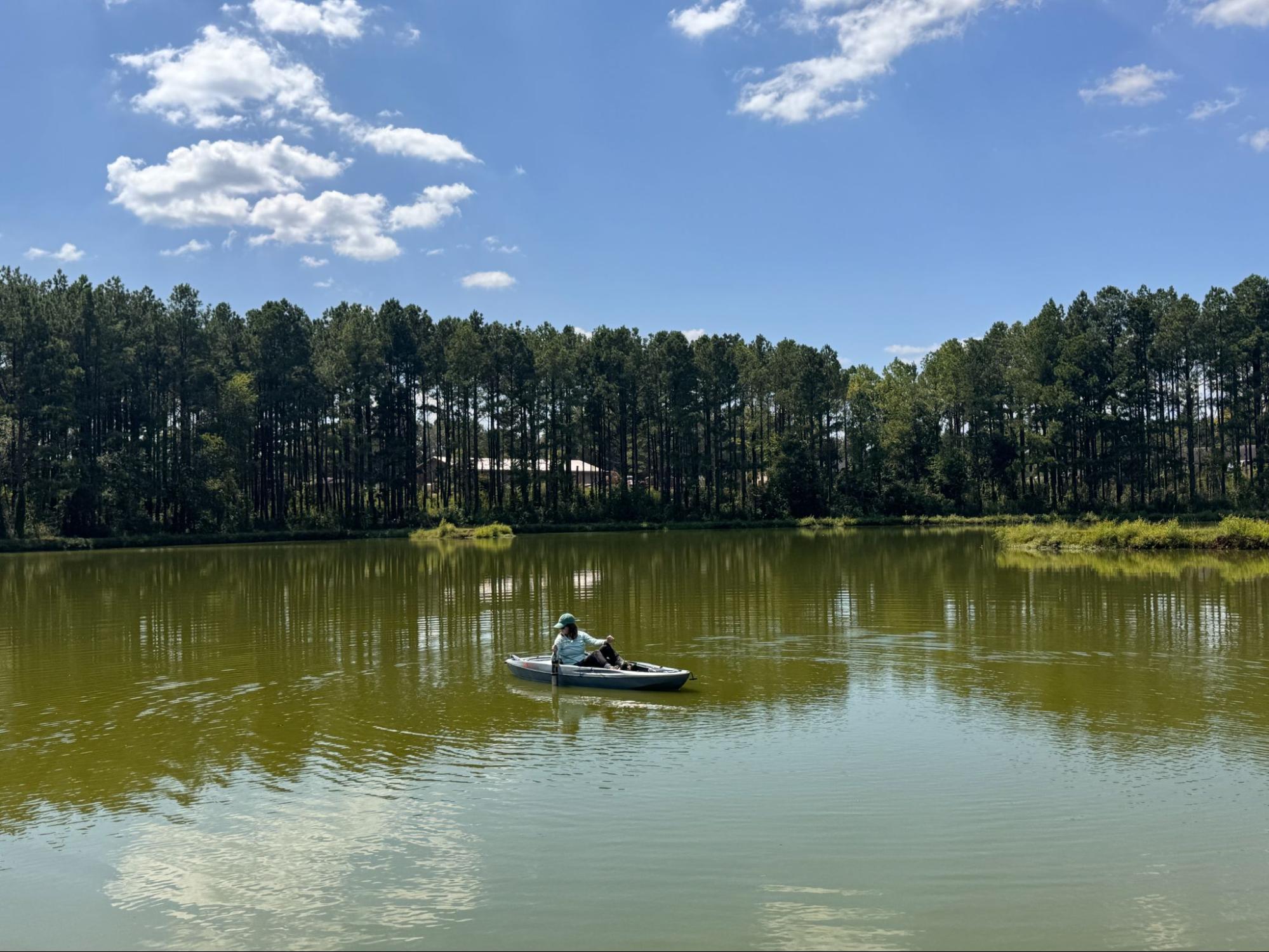
This year, we are particularly excited about the addition of some new tests that will expand our knowledge of the decomposition happening across treatments and sites. In the field, we will assess how low the oxygen levels are underground and underwater via oxidation-reduction chemistry potential at buried replicates and dissolved oxygen at submerged replicates. These are commonly used measurements for environmental oxygen readings, which are helpful for understanding whether our treatments actually reach low enough conditions to prevent fungal and insect decay.
In the lab, we are adding a lignin chemistry analysis, which tells an important story about the carbon remaining in the cookies. By measuring how much lignin versus other polymers remain in every Year 6 wood cookie against a fresh sample of the same species, we can trace the path of decomposition and find out whether the wood that's left can truly be considered stored carbon. If there is low lignin compared to other polymers, the sample was probably consumed by one of our decay agents, like white rot or bacteria. High lignin indicates brown rot was the main driver of decay.
Isabella and Alika are excited to get to our field sites, get their hands dirty, and decipher the story behind the Wood Cookie Experiment. To follow along with this exciting project, keep an eye out for our next blog post to see what happened to our freshly dug-up batch of decayed wood cookies and how our results inform biologic carbon capture solutions.