Nailing It: A New Way to Build With Waste Wood
Our long-running Carbon Vaults work has led to a new peer-reviewed paper, published in Technology|Architecture + Design, documenting years of hands-on research into an unglued, all-wood alternative to conventional mass timber. Co-authored with Professor Jana VanderGoot and Abdureuf Mohammed Hussien of the University of Maryland School of Architecture, the paper traces how we went from a basic idea, using low-value forest residue to build something durable, to a fully constructed demonstration building in Guilford, Connecticut.
The starting problem is one we return to often: forest thinning generates enormous volumes of small-diameter, non-merchantable wood that has little commercial value, yet leaving it to decay or burning it in slash piles releases carbon and, in the case of burning, degrades soil health and air quality. Mass timber offers one way to give this material real value, but the dominant products on the market, like Cross-Laminated Timber, rely on glue and specialized manufacturing facilities that most conventional wood-frame builders can't access. We wanted to know whether an all-wood, mechanically fastened alternative could close that gap.
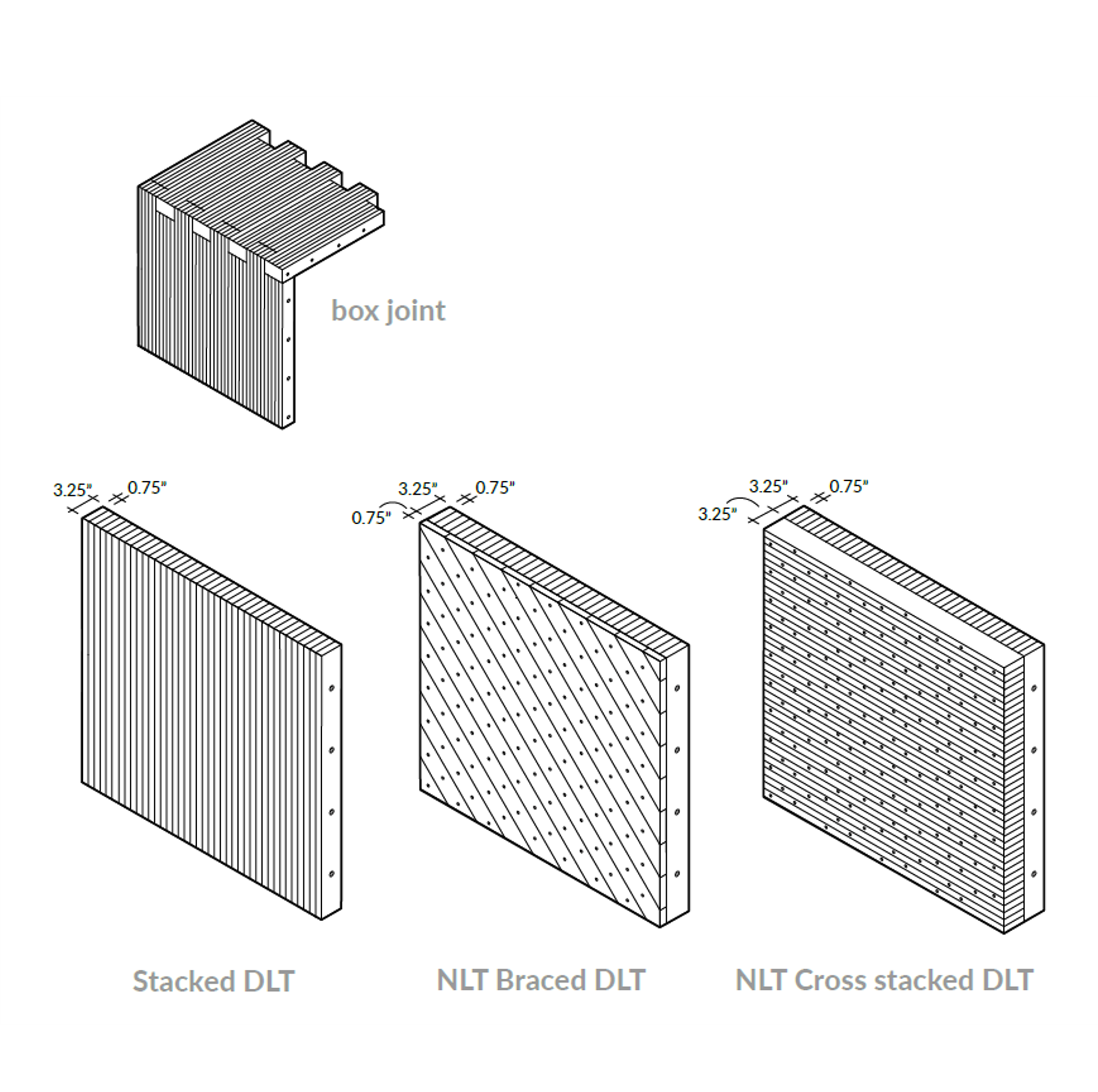
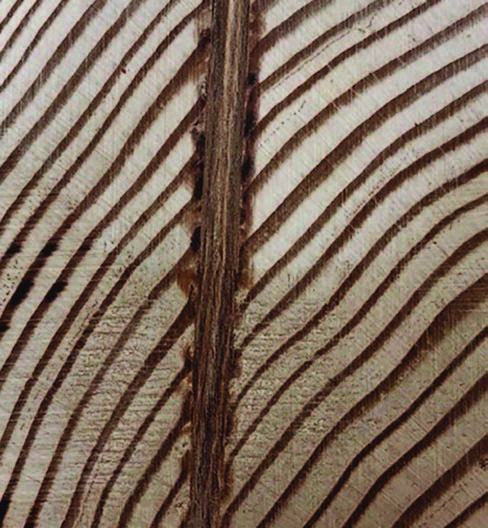
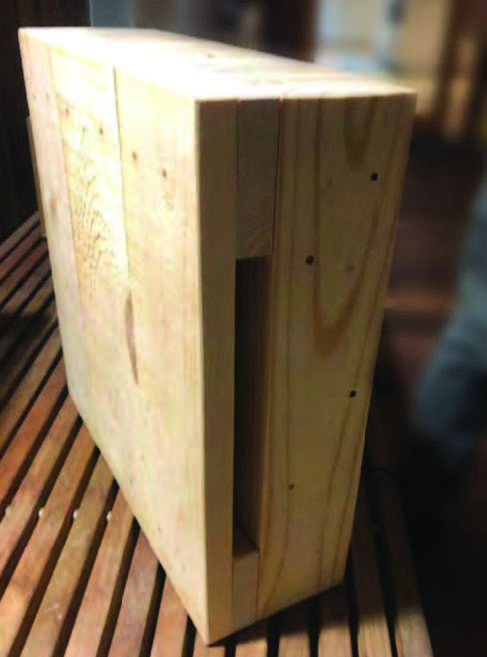
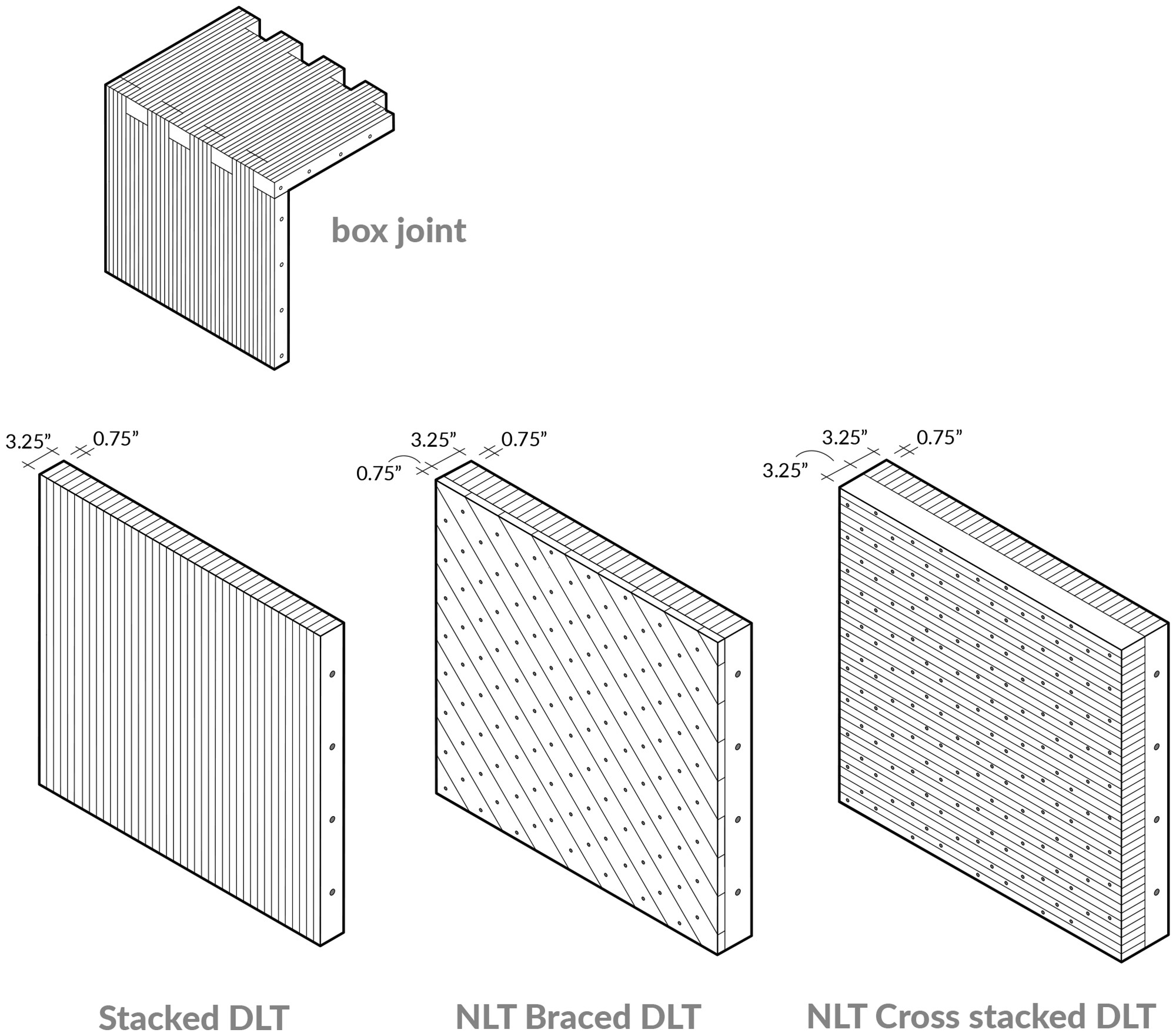
Working through a "Making as Knowing" and Design Thinking process, we tested several approaches before landing on wood-welded Nail Laminated Timber (wNLT). Unlike Dowel Laminated Timber, which requires precisely dried hardwood dowels and expensive pneumatic presses, wNLT uses hardwood nails driven at high speed into softwood panels, where friction and heat create a natural weld. It's a technique builders already familiar with standard nail guns can pick up quickly, using equipment far cheaper than what glue-laminated or dowel-laminated products demand.
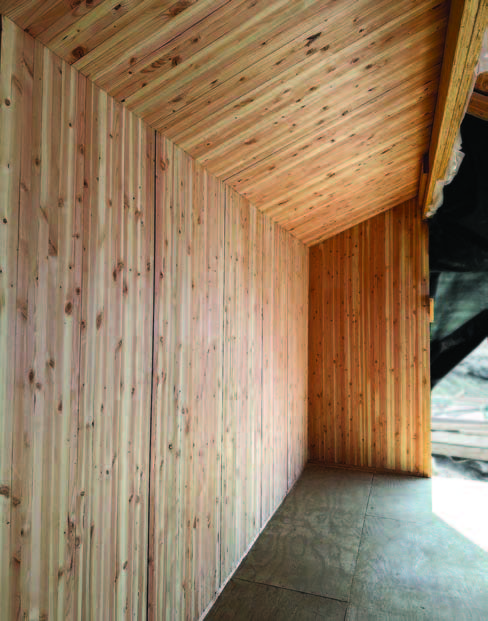
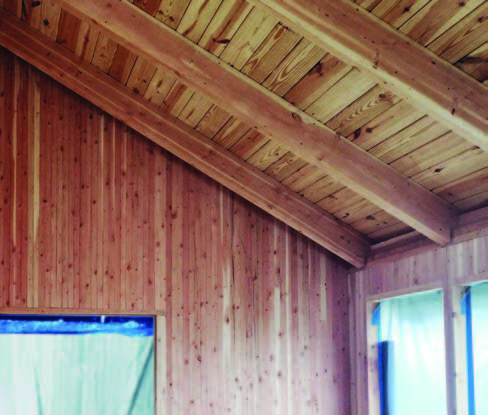
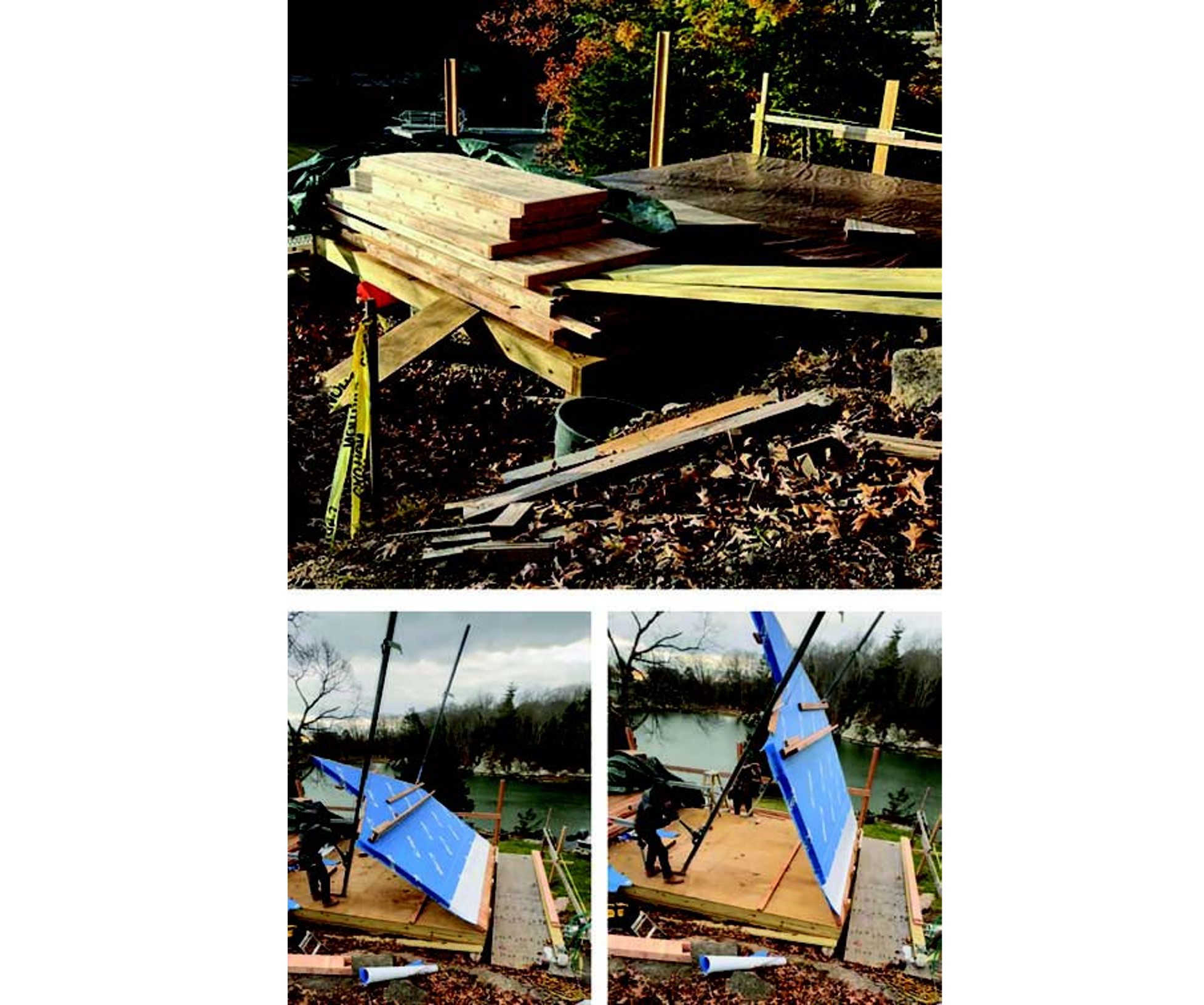
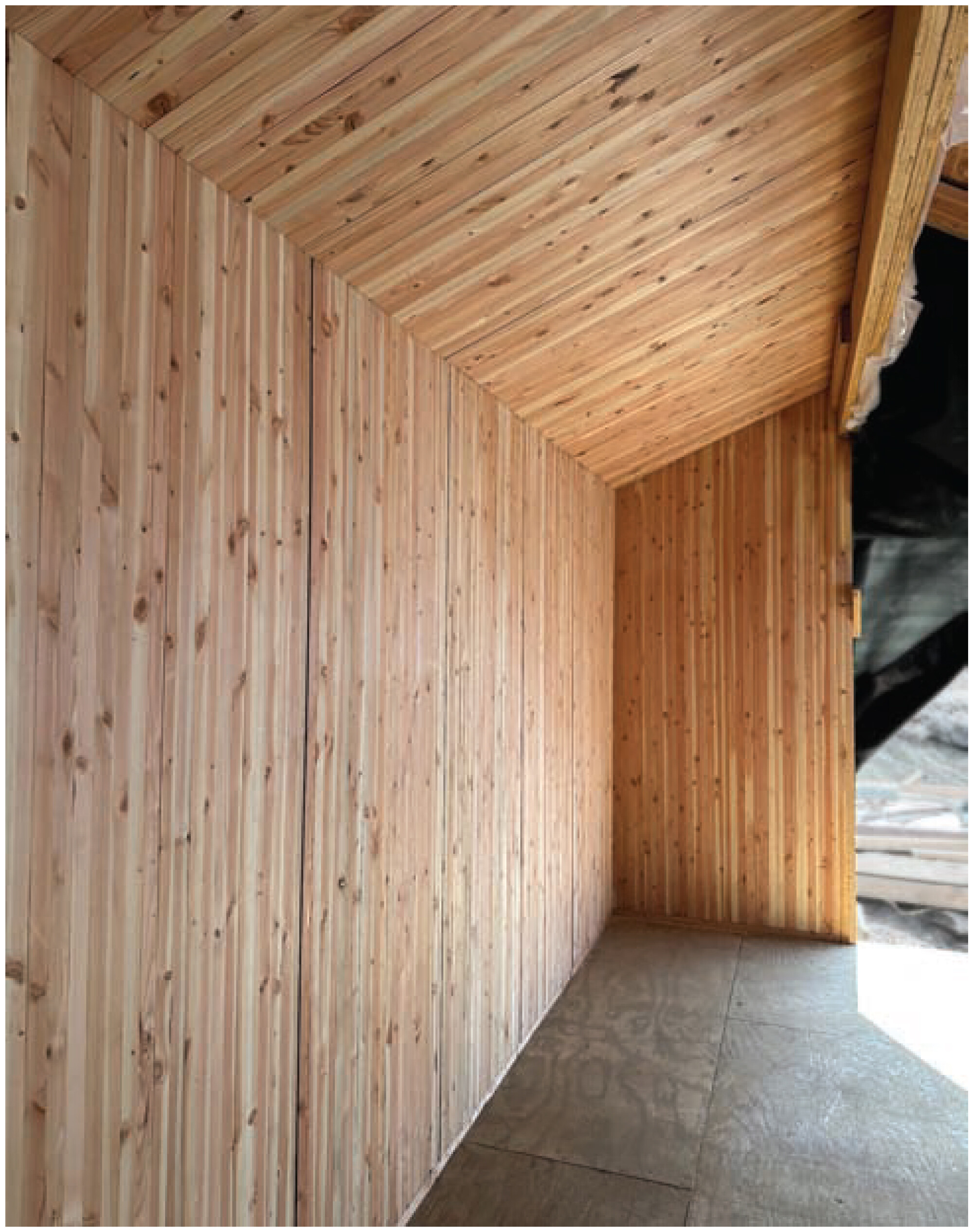
We built a full demonstration structure to test this in practice, prototyping five different wNLT wall panel types, each varying in nailing pattern, plywood sheathing, and use of construction glue, and worked through real construction challenges along the way: nail splitting during early prototyping, moisture penetrating panel cores, and figuring out joint designs that could accommodate wood's natural swelling and shrinking. The building was successful enough to secure a follow-on US Forest Service Wood Innovation Grant for further structural testing, which is ongoing.
Beyond the technical case, this work carries a broader argument about access. Keeping design and fabrication knowledge for products like wNLT open, rather than locking it behind patents or specialized facilities, matters for who actually gets to build with it. Solid wood panel construction has deep roots worldwide, from cedar plank houses built by the Chinook and Tillamook peoples to timber-frame traditions across Europe and Japan, and part of what draws us to this work is the chance to connect that history to a modern, low-carbon building material. We see real potential for wNLT in affordable housing and multifamily retrofits, where the demand for accessible, locally sourced construction materials is highest.