Project Impact
The Carbon Containment Lab is working to build the evidence base needed to drive and support faster, more cost-effective, and higher integrity methane mitigation for end-of-life oil and gas wells.
End-of-life oil and gas wells emissions follow a heavy-tailed distribution: a small fraction of wells account for the vast majority of the problem. Identifying and acting on those highest-emitting wells could deliver well over 130 million metric tons of CO₂e reductions annually, at relatively low cost and with immediate near-term climate impact.
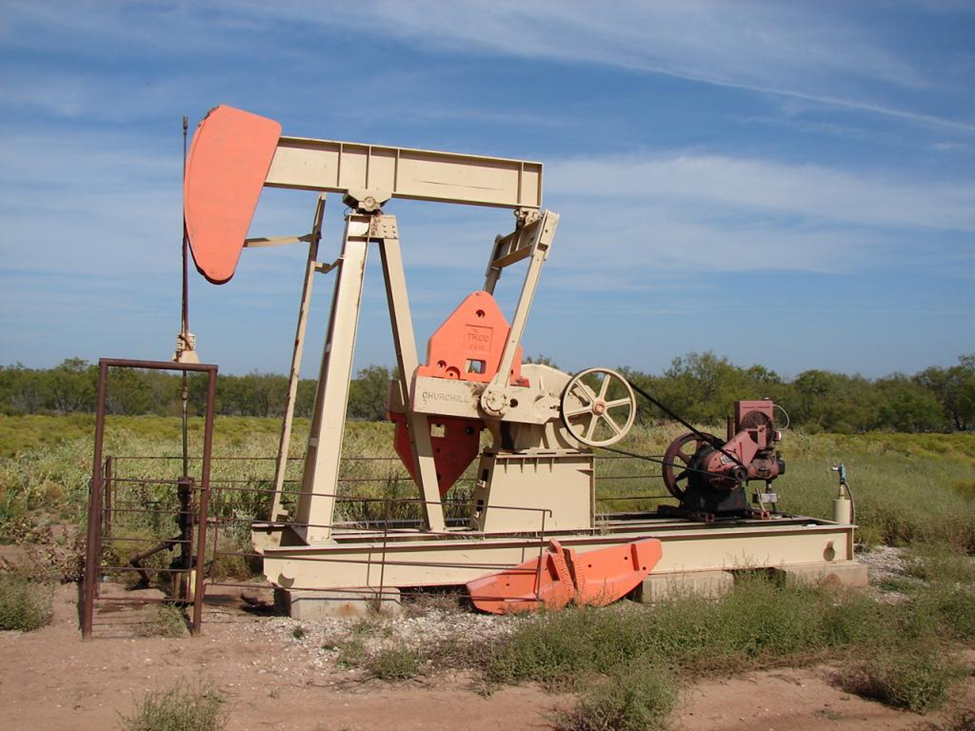
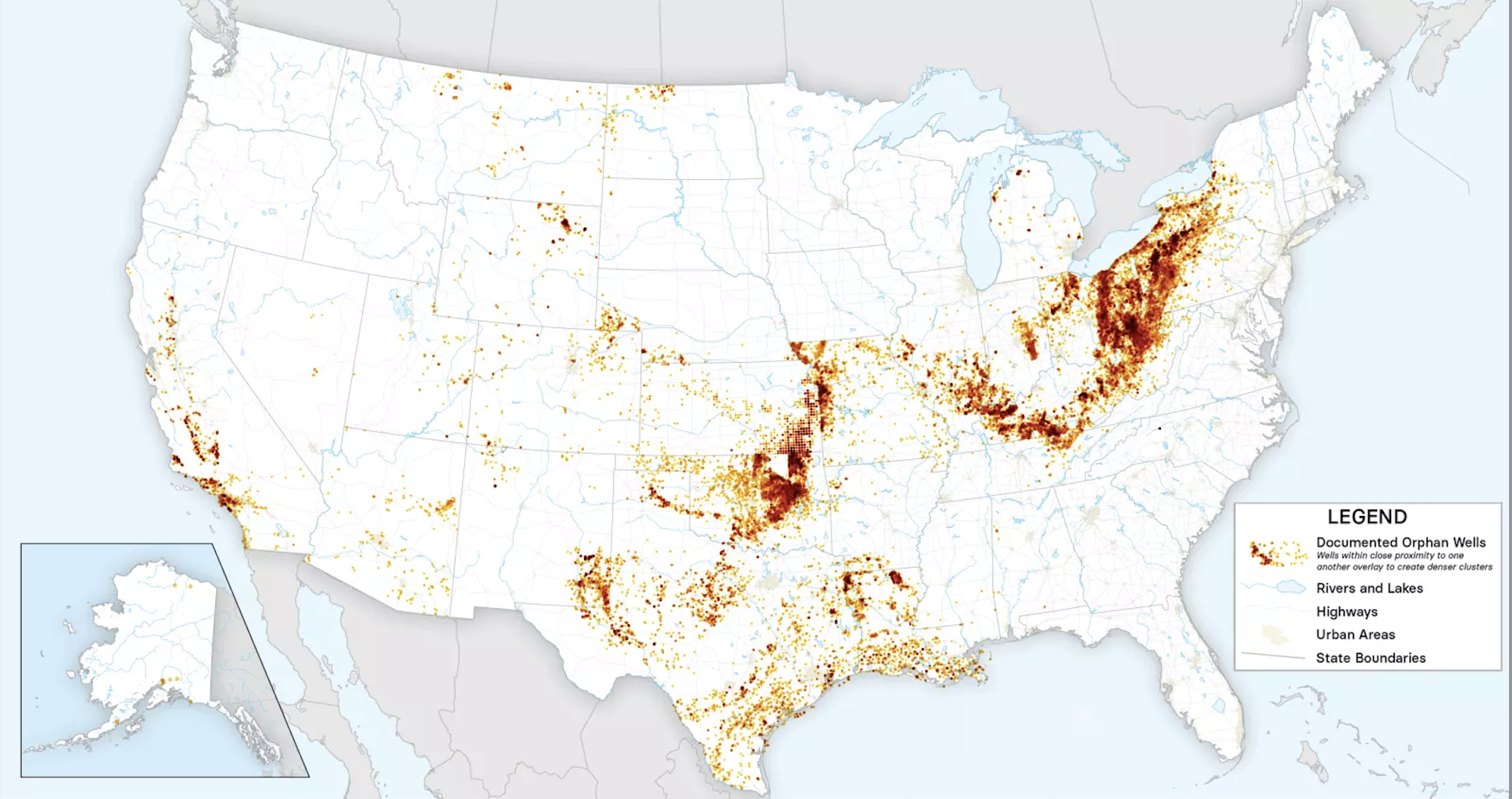
A significant share of this problem traces to abandoned and orphaned oil and gas (AOOG) wells. Abandoned wells are non-producing assets with a solvent operator that may or may not be plugged; orphaned wells go a step further, with no known owner or solvent operator, leaving plugging responsibilities to the state by default. Many orphaned wells are also "undocumented," meaning their locations, ownership statuses, and production histories are unknown. There are at least 120,000 documented orphaned wells in the United States and Canada, but the true number is likely far higher; some studies suggest regional databases undercount these wells by a factor of ten. These wells are scattered across public, private, and tribal lands, and over 4.6 million Americans live within one kilometer of a documented orphaned well. Existing regulations were designed to prevent wells from reaching this state, but financial assurance requirements have proven chronically inadequate, and government plugging programs face decades-long backlogs.
The problem extends beyond orphaned wells. Over 575,000 wells in the United States are classified as marginal; they produce at or less than 15 barrels of oil equivalent (BOE) per day and have a known owner and solvent operator. Also known as stripper wells, these assets are operated at the edge of profitability and make up three-quarters of all active US oil and gas producing wells. Despite contributing only about 5 percent of total US oil and gas production, marginal wells are estimated to account for roughly half of all oil and gas well-site methane emissions. Their small production volumes make their operations highly emissions-intensive, and their sheer numbers make them difficult to monitor and regulate.
Leak Detection and Quantification
With hundreds of thousands of marginal and orphaned wells scattered across the country, not all can be addressed at once. Targeting investment where it delivers the greatest climate benefit means finding the highest emitters first. A range of technologies exist for this purpose, from handheld optical gas imaging cameras and ground-based sensors to aerial surveys and satellite-based detection, each with distinct trade-offs in sensitivity, spatial coverage, cost, and ease of deployment.
Methane emissions from individual wells are highly variable, intermittent, and sensitive to subsurface conditions that change over time. A single snapshot measurement may not reflect a well's true average emission rate. Funders, credit buyers, and regulators all need confidence that the well being targeted is genuinely among the worst emitters, and that the benefit of plugging it can be robustly quantified. Closing the gap between what detection technologies can see and what quantification methods can reliably measure is a central focus of this project.